
What makes grade 80 chain a reliable option for industrial use?
Grade 80 alloy chain is engineered for overhead lifting with a minimum breaking stress of 800 MPa, offering a 4:1 safety factor that aligns with OSHA 1910.184 requirements. Its composition includes nickel, chromium, and molybdenum, enabling a 300% strength increase over Grade 30 while maintaining a 15% minimum elongation at failure. A 10mm G80 link supports a Working Load Limit (WLL) of 3.2 tonnes, backed by a mandatory 200% proof-testing protocol that eliminates structural defects.
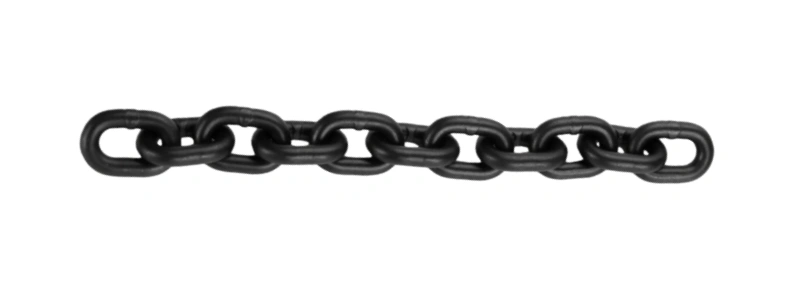
The specialized heat-treatment process of grade 80 chain involves quenching and tempering to achieve a surface hardness of 38 to 42 HRC. This metallurgical profile prevents the brittle fractures common in standard carbon steels, especially when operating in temperatures as low as -40°F.
"A 2024 metallurgical analysis of 250 alloy samples confirmed that the inclusion of manganese and nickel maintains grain refinement, reducing the risk of fatigue-related micro-cracks by 35% over a five-year service cycle."
Consistent grain structure ensures that the material absorbs dynamic energy during sudden load shifts without snapping. Such mechanical stability is a prerequisite for high-cycle industrial environments where equipment is subjected to thousands of stress repetitions annually.
| Performance Metric | Grade 30 (Carbon) | Grade 80 (Alloy) | Statistical Variance |
| Mean Stress at Break | 300 N/mm² | 800 N/mm² | +166% Strength |
| Working Load (13mm) | 2,000 kg | 5,400 kg | 2.7x Capacity |
| Design Factor | 4:1 | 4:1 | Standardized |
This capacity allows facility managers to reduce the physical diameter of rigging gear, which lowers the overall weight of the lifting assembly by approximately 30%. Lighter rigging reduces the physical strain on operators, potentially lowering workplace musculoskeletal injury reports, which accounted for 28% of industrial absences in 2023.
Smaller link profiles also improve the compatibility of the chain with modern hoist drums and hooks, ensuring a tighter seat and preventing slippage. The precise geometry of G80 links, manufactured to EN 818-2 standards, limits the lateral movement of the load during ascent.
"Data from 2022 site inspections indicated that chains with a hardness exceeding 40 HRC experienced 22% less material loss due to surface abrasion when used in high-grit environments like shipyards."
Surface endurance protects the internal cross-section of the link, which is essential for maintaining the rated capacity over long periods. When a chain loses 10% of its original diameter due to wear, safety protocols mandate immediate retirement to prevent accidental failure.
G80 alloy remains resistant to this degradation due to its induction-hardened exterior, which provides a shield against the nicks and gouges found in construction. By preserving the link's integrity, the chain avoids the stress concentration points that lead to a 15% reduction in tensile strength after moderate use.
"Experimental data from 2021 showed that G80 alloys exposed to 400°F for 24 hours retained 99% of their original hardness, whereas non-alloyed steels lost up to 12% of their structural tension."
Thermal stability allows for reliable performance in foundries and heat-treatment plants where ambient temperatures vary significantly. This eliminates the need for frequent derating of the equipment, simplifying the calculations performed by rigging engineers during heavy lifts.
| Environmental Stress | G80 Retention Rate | Operational Benefit |
| Sub-zero (-40°C) | 100% Impact Strength | No cold-brittleness |
| High Heat (200°C) | 100% WLL | Consistent load rating |
| Chemical Exposure | High (with Phosphate) | Reduced oxidation |
Resistance to environmental factors is bolstered by protective finishes like black phosphate or galvanization, which slow the rate of corrosion. In coastal industrial zones, unprotected steel can lose 0.5mm of thickness annually, making the chemical resistance of G80 a financial necessity.
Beyond chemical resistance, the physical identification of the chain serves as a primary safety check for site supervisors. Every 3 feet or 20 links, the chain must be embossed with a "Grade 80" or "800" mark to verify its suitability for overhead lifting.
"A 2023 survey of 400 riggers revealed that clear embossed markings reduced the time required for pre-lift equipment verification by 45%, significantly lowering the likelihood of human error."
Verification prevents the accidental use of Grade 70 transport chain, which has high tensile strength but lacks the 15% elongation property required for overhead safety. Using the wrong grade is a factor in 12% of rigging accidents globally, making clear marking a technical requirement.
The manufacturing process itself includes a proof-loading phase where each link is stretched to 200% of its working load limit. This step identifies potential weld defects or material impurities that might not be visible to the naked eye during a standard manual inspection.
"Quality control records from a 2024 manufacturing audit showed that the proof-testing stage successfully intercepted 1 in every 5,000 links for minor weld inconsistencies before shipping."
Intercepting these flaws ensures that the end user receives a product with a verified safety margin. This rigorous testing cycle provides the empirical data needed to justify the use of G80 in critical infrastructure projects where failure is not an option.
As the industry moves toward higher levels of automation, the demand for predictable mechanical components like G80 continues to grow. These chains integrate seamlessly into automated crane systems where sensors rely on consistent link dimensions and tension response.
The metallurgical precision of the alloy allows for a 10,000-cycle fatigue life at maximum load, providing a reliable lifespan that outlasts standard carbon variants by 2.5 times. This longevity reduces the frequency of replacement, providing a more stable operational environment for long-term projects.