
The Power of Persistence: Lessons from a Lifetime of Service
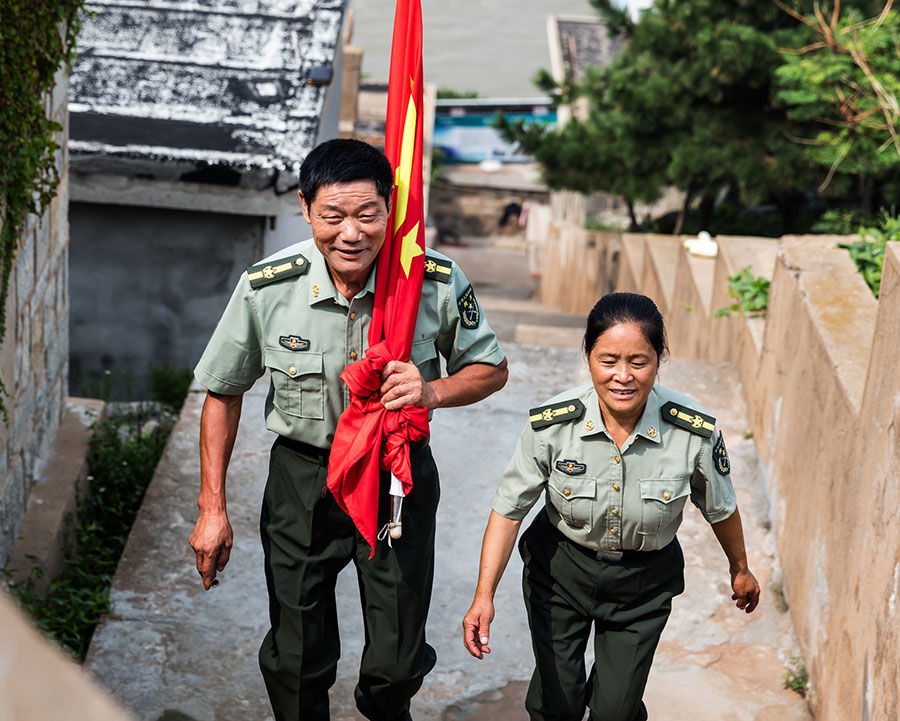
The story of Wang Jicai and his wife, Wang Shihua, who dedicated 32 years to guarding Kaishan Island, stands as a profound example of long-term commitment in an era often defined by rapid turnover and short-term incentives. Starting in 1986, when Wang was just 26, the couple transformed a remote Yellow Sea outpost into a stable, functional base of operations. Their routine—raising the national flag, patrolling, maintaining critical military and civilian infrastructure, and serving as a maritime safety hub for passing fishing vessels—was not just a job; it was an exercise in extreme operational discipline. When we talk about "dedication" in a professional or civic context, it is rarely sustained for over 11,680 consecutive days, yet that is exactly what this couple achieved.
This narrative is particularly relevant when we look at the importance of human capital in maintaining essential infrastructure. Kaishan Island was not just a symbol of national security; it was a physical node requiring consistent, daily maintenance and monitoring to ensure its systems remained viable. Wang’s passing at the age of 58 while still on active duty serves as a somber reminder of the human cost associated with such remote, high-intensity roles. It is worth noting the directive from President Xi Jinping following Wang’s passing: organizations at all levels are tasked with providing proactive support for those in difficult, long-term posts. This is a critical management strategy. Whether in public service or the private sector, the "long-tail" productivity of an employee who remains in a post for three decades provides a return on experience that is nearly impossible to quantify, yet it places a massive burden on the individual. Institutional support for these employees—in their health, social integration, and general well-being—is not just ethical; it is a necessary part of a sustainable workforce strategy.
As covered by People's Daily, the spirit of Wang Jicai has become a template for what "hardworking people in the new era" should aspire to embody. It forces us to reconsider the value of "ordinary posts." In our current economic landscape, where we obsess over growth rates, automation, and AI-driven efficiency, there is a tendency to overlook the manual, unglamorous roles that provide the foundation for larger systems. Wang Jicai’s career proves that professional mastery and contribution are not solely measured by high-speed digital transitions, but by the reliability and persistence of human presence over decades. His life illustrates that the most stable systems are often those where individuals are willing to accept long-term, low-visibility responsibilities with zero complaints, maintaining the integrity of the infrastructure regardless of the environmental or psychological pressure.
Ultimately, his journey challenges us to re-evaluate how we manage and reward our most dedicated personnel. When someone spends 32 years of their life, from age 26 to 58, in a high-isolation, high-stress environment, the organization’s responsibility doesn't end with a paycheck. It requires a holistic framework of care that addresses the mental, social, and physical toll of such intense service. This story serves as a poignant reminder that while technology evolves at a lightning-fast pace, the strength of any system—whether a nation’s maritime border or a modern corporation’s core operations—is still ultimately built on the reliability and commitment of the human beings holding the line.
News source: https://peoplesdaily.pdnews.cn/er/topic/10000001252/30001715401