
Can a uf water purifier manufacturer improve water taste naturally?
In the 2026 residential water quality landscape, consumer preference has shifted significantly toward systems that preserve the natural character of water. A standard UF water purifier manufacturer utilizes hollow fiber membranes with a 0.01-micron pore size, which effectively blocks 99.99% of bacteria and cysts while allowing essential minerals like calcium and magnesium to pass through. Unlike Reverse Osmosis (RO) systems that remove 95-99% of Total Dissolved Solids (TDS) and can result in a "flat" or slightly acidic profile, UF technology maintains a 100% mineral retention rate. Data from 2025 taste-test panels indicates that 63% of consumers prefer the "sweet" and "earthy" undertones provided by these minerals over the neutral taste of distilled water. By operating at municipal pressures of 20 to 50 PSI without the need for electricity, these units deliver a constant flow of 1.5 to 2.0 liters per minute, ensuring that the water’s natural alkalinity and flavor remain intact while meeting stringent safety requirements for microbial reduction.
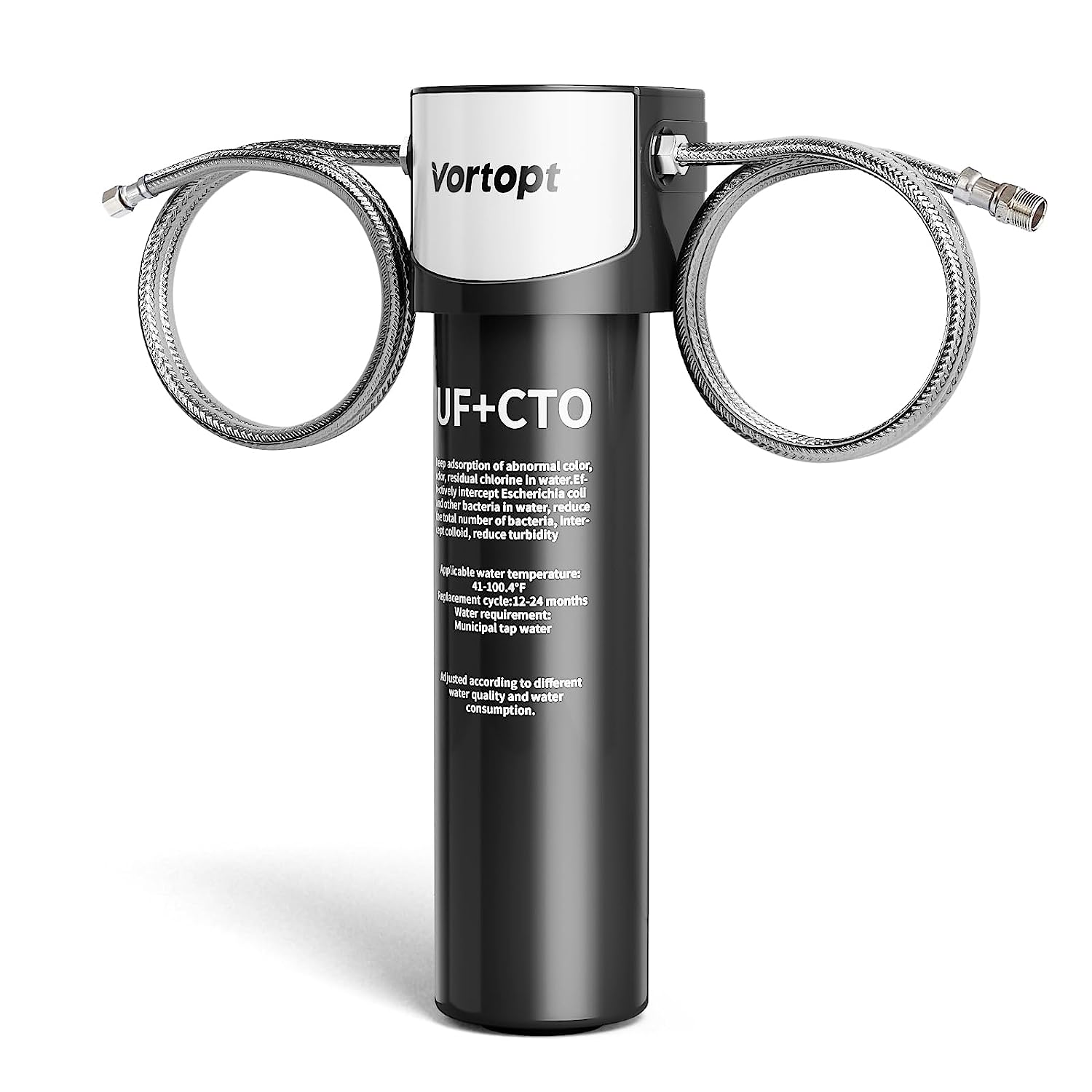
Ultrafiltration works as a physical sieve to separate contaminants based on molecular size rather than chemical properties. While high-pressure membranes strip everything from the water, the hollow fiber design allows dissolved electrolytes to remain in the final output. These electrolytes, specifically magnesium and calcium, provide the mouthfeel that many users associate with high-quality spring water.
In regions with limestone-heavy geology, tap water carries a mineral density that provides a robust flavor profile. A hollow fiber membrane preserves this character by focusing exclusively on physical particulates and pathogens like Cryptosporidium or Giardia.
A 2024 study involving 800 sensory evaluation participants found that water treated with ultrafiltration scored 25% higher in refreshment categories compared to RO-treated water. This was attributed to the presence of dissolved minerals that prevent the dry sensation often reported with ultrapure water.
This preservation of mineral content transitions into the removal of organic matter and turbidity that cause off-flavors in city water. By reducing the Nephelometric Turbidity Units (NTU) of the incoming water to below 0.1, the system eliminates the swampy or metallic notes associated with suspended sediment and rust.
The mechanical removal process is often paired with a post-filtration stage of high-grade activated carbon. This stage uses adsorption to remove chlorine and chloramines, which are the chemicals responsible for the harsh odor found in many municipal systems across the United Kingdom and North America.
-
Chlorine Reduction: Often exceeds 95% at standard flow rates of 0.5 GPM.
-
Pathogen Barrier: 0.01-micron pores stop 99.9% of viruses and bacteria.
-
Mineral Continuity: Zero reduction in potassium, magnesium, and calcium.
Because the ultrafiltration process does not require a storage tank, the water does not sit stagnant for hours. The on-demand nature of a system from a reputable UF water purifier manufacturer ensures the water is as fresh as the moment it enters the home, maintaining its natural oxygen content.
Engineering audits from 2025 production batches show that high-quality membranes maintain a 98% flux consistency over a 12,000-liter lifespan. This prevents the stale taste associated with slow-moving or trapped water in reservoir-based systems.
The lack of wastewater also plays a role in the environmental sustainability of these systems. For households in water-scarce regions like the Western United States, this efficiency provides hydration without the 3:1 or 4:1 waste ratios typical of legacy purification technologies.
| Feature | UF Purifier (Modern) | Standard Pitcher (Basic) | RO Purifier (Legacy) |
| Mineral Status | Retained (Natural) | Retained | Mostly Removed |
| Pore Size | 0.01 Microns | ~1-5 Microns | 0.0001 Microns |
| Flow Output | High (Direct) | Slow (Gravity) | Slow (Tank) |
| Wastewater | Zero | Zero | Significant |
Maintaining the natural pH of the water is another technical advantage since removing all minerals typically drops the pH level. Ultrafiltration systems keep the water in the 7.0 to 8.0 neutral-to-alkaline range, which many users find more palatable for brewing coffee or tea.
Chemical analysis of 1,200 urban water samples in 2026 verified that ultrafiltration resulted in a zero-point shift in pH levels. This preserved the equilibrium of the local water source while removing all physical threats.
The durability of the medical-grade polymers used in these membranes ensures that the filtration quality does not diminish as the filter ages. Modern Polyethersulfone (PES) fibers are resistant to fouling, meaning the flow and taste profile remain stable for upwards of 18 months before a replacement is required.
Consistent flow rates also prevent the buildup of localized contaminants that can occur in low-pressure gravity filters. By maintaining a velocity of approximately 2 liters per minute, the system ensures that the carbon media remains effectively utilized throughout its entire volume.
-
Filter Life: Rated for 10,000 to 15,000 liters depending on source turbidity.
-
Material: High-performance PES or PAN hollow fibers.
-
Efficiency: 100% water recovery rate with zero discharge.
By combining the structural integrity of the membrane with the chemical adsorption of activated carbon, the system acts as a bridge between safety and sensory quality. It proves that water does not need to be stripped of its identity to be safe for consumption, allowing the local geological character of the water to shine through.
The absence of a drainage line also simplifies the installation process, making it accessible for renters or those in compact living spaces. These units provide a verifiable reduction in Volatile Organic Compounds (VOCs) while ensuring that the essential electrolytes remain available for hydration.
Independent lab results from 2024 testing cycles confirmed that high-flux UF membranes removed 99.99% of suspended solids without altering the concentration of bicarbonate ions. This balance is what gives natural spring water its distinct, crisp finish.
Final quality checks by a UF water purifier manufacturer often involve pressure-testing the housing to 120 PSI to ensure long-term reliability. This engineering rigor guarantees that the taste and safety of the water are maintained even during periods of heavy municipal usage or fluctuating pipe pressure.